What investors really look for — lessons from imec.istart Investor Day
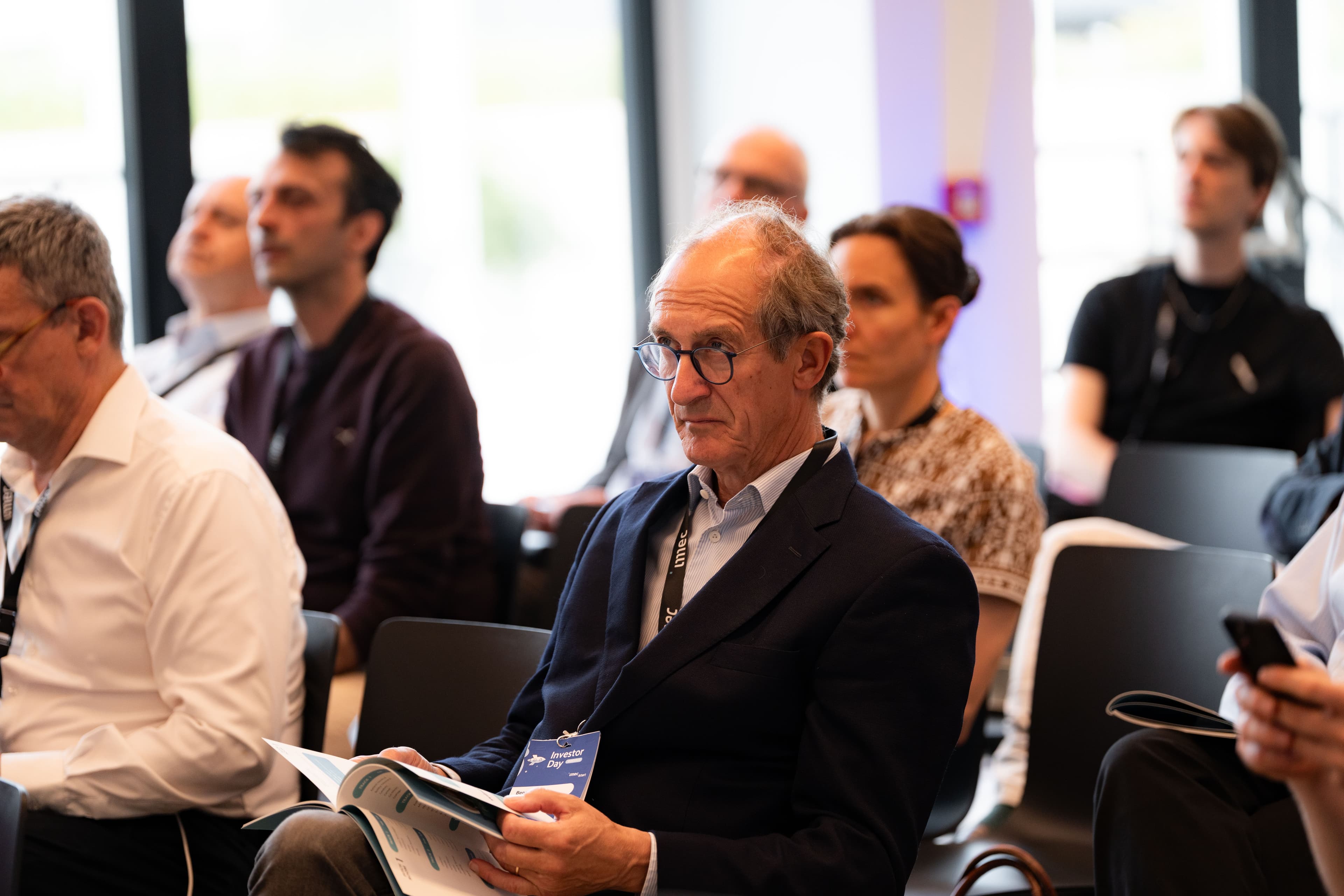
Twice a year, imec.istart brings together its portfolio startups and a curated group of investors for a day of pitches, conversations, and deal-making. This spring's edition took place at Vestar in Antwerp.
We sat down with a handful of investors to ask what they are really looking for when evaluating early-stage startups.
Here is what we took away.

The imec.istart label already creates trust
Thomas Batsleer, Venture Tech Investor at Holland Capital, was direct about why events like this are worth his time. Investor Day is one of the pitching events he marks in his calendar without hesitation. The startups he meets there consistently provide a strong pipeline for future opportunities.
According to Batsleer, around 75% of the startups that pitched were interesting enough to follow for possible investment within the next six to eighteen months. Most were still a little too early-stage for an immediate investment, but many were worth keeping on the radar.
Defensibility matters more than the business model label
The so-called "SaaS apocalypse" has been widely discussed in startup circles. But has it really changed how investors make decisions?
The investors we spoke to gave a nuanced answer. What matters most is whether a startup has something that is difficult to copy. A key factor is data ownership. If a startup's customers bring their own proprietary data — data that is hard to extract or replicate by a competitor— that creates a strong position. If the data is easily replicated, the story changes quickly.
In other words, it is less about whether a company is SaaS or not, and more about the defensibility of what it has built. The underlying investment criteria have not fundamentally shifted, but the questions have gotten sharper.
Team still comes first
Ask any investor what they look for, and "team" is always near the top. But what does that mean in practice?
Complementarity came up consistently. A strong founding team has someone who can sell and someone who can build — at minimum. And it should stay lean: two or three co-founders is the sweet spot. Beyond that, things get complicated.
Beyond composition, the traits that came up most often were resilience, coachability, and the ability to adapt. At the earliest stages, the product can evolve, markets can change, and business models can shift. What's much harder to change is the mindset of the founder leading the company.
Equally important is the fit between a founder's personal motivation and the problem they are solving. The journey is long and demanding. Founders who are genuinely connected to the problem they are working on are better equipped to push through the hard stretches — and investors are paying close attention to exactly that.
AI has raised the bar — for everyone
AI is reshaping how investors think about early-stage companies, but not in the way the headlines usually suggest.
On one hand, strong founders can go further with less capital. They can test faster, validate quicker, and reach the market more efficiently. The best teams are getting better.
On the other hand, it has become significantly harder for investors to separate strong propositions from weak ones. Access to unique data, differentiated market knowledge, and exceptional execution speed have become the clearest signals of a truly standout team. Everyone can build something that looks convincing. Fewer can build something that genuinely holds up.
Why meeting in-person still matters
Events like Investor Day are a good reminder that nothing replaces meeting people face to face. Conversations that start over a pitch and a coffee have a way of turning into something more lasting. That is how relationships in this industry actually begin — and why we keep organising them.
That is one of the reasons events like Investor Day continue to matter.
Want to join next time?
The next imec.istart Investor Day takes place on Tuesday, 24 November 2026. The event is open to invited investors only. If you are interested in joining, you can find more information and register your interest on our investor page.