The state of tech in Europe vs the US
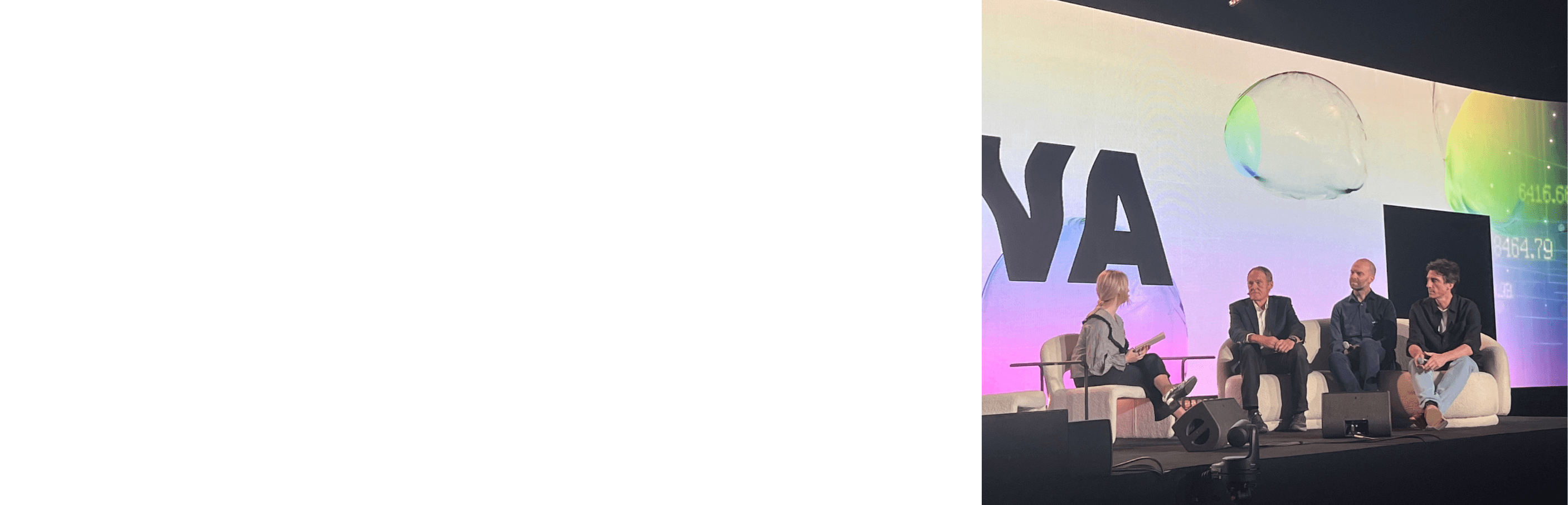
Last week at SuperNova, Julien Codorniou (20VC), Sven De Cleyn (imec.istart) and Sean Randolph (Bay Area Council) took the main stage to discuss how global shifts are reshaping the tech landscape on both sides of the Atlantic.
In what follows, we take a closer look at the key themes that emerged on stage.
1. Europe is waking up
The message on stage was clear: the world is changing, and Europe has a choice to make.
Julien Codorniou described this as a unique moment. European buyers are actively looking for European technology - something he hasn’t seen at this scale in 20 years. The demand is there, but supply is still catching up.
At the same time, geopolitical tensions are increasing the focus on defence in both Europe and the US. Budgets are rising, along with the recognition that technology is critical for security and strategic autonomy.
In the US, this shift started earlier. Defence moved away from relying only on large, slow contractors and began working more closely with startups. Through initiatives like the Defense Innovation Unit, startups receive funding to build prototypes and can scale into larger contracts if successful.
Sven De Cleyn summarized it well:
"Geopolitical tensions are a wake-up call, but also an accelerator. Things that used to take decades are now moving much faster. The opportunity is there - the question is whether Europe can move fast enough."
2. US investors in Europe: more than just capital
Another key topic was the growing presence of American investors in Europe.
This is not just about money. US investors also bring:
- experience and networks
- a different way of working
- more speed and conviction in decision-making
At the same time, Sven De Cleyn stressed that this should not be a one-way dynamic. Europe has strong technology and investors as well, and can support US companies entering European markets. However, fragmentation across Europe remains a challenge.
According to Sean Randolph, the growing US interest is also driven by the strength of European talent. Where investors once focused locally, they are now increasingly looking at European ecosystems.
Overall, the relationship is becoming more balanced: with capital, knowledge and talent flowing in both directions.
3. The storytelling gap
Another difference discussed was how European startups present themselves to investors.
Sean pointed out correctly that investors are not just looking for strong engineering, but for the ability to scale - and the ambition to communicate that clearly.
Sven acknowledged that Europe can improve here. Fundraising is not only about metrics, but also about communicating a clear vision. This skill improves as more founders go through the full journey and gain experience.
4. What Europe does well
At the same time, Europe has clear strengths:
- The depth of engineering talent
- The strength of research institutions.
These are not weaknesses, but key assets.
The challenge is to better connect these strengths to markets, funding and global ecosystems.
5. The scale-up challenge
Scaling remains one of Europe’s biggest challenges.
Early-stage funding is relatively accessible, but growth capital is still heavily concentrated in the US - especially in Silicon Valley.
In 2025, for example:
- 62% of all global AI venture investment went to San Francisco
- nearly 70% of US venture capital was concentrated in the Bay Area
This concentration of capital, experience and successful companies makes it easier for startups to scale quickly.
As a result, many European startups still look to the US when they are ready to grow internationally.
That said, Julien pointed out how much progress has been made. In the past, founders had to go to the US to raise money. Today, US investors actively come to Europe - sometimes moving very fast. However, European companies still tend to buy from US startups, meaning much of the traction and growth still happens in the US.
Sven added that there are also early signs of the reverse happening, with US companies collaborating with European research institutions and building technology in Europe. Europe is catching up: more experienced founders are becoming investors, strengthening the ecosystem. But challenges remain - especially fragmentation and risk aversion. Increasing speed and removing barriers will be key.
6. Founder culture
On startup culture, the panel agreed that the so-called “grind culture” is not new in Europe.
Everybody agreed that it’s not about working hard for the sake of it, but about intrinsic motivation. The best founders choose to go all in because they believe in what they’re building.
What has changed is what happens after success: more founders are now giving back, supporting others and sharing their experience. This “pay-it-forward” culture is becoming more visible in Europe.
6. Can Europe catch up with the US?
The final question brought a clear consensus: catching up is not the right goal.
Sean explained that Silicon Valley is a unique ecosystem, with a concentration of capital, talent and experience that is difficult to replicate. But that’s not necessary. The focus should be on building strong European ecosystems based on local strengths, while continuing to collaborate globally.
Julien was even more direct: Europe will not catch up, but it is improving. More founders are reinvesting, building new companies and strengthening local ecosystems.
Sven concluded that Europe should not try to copy Silicon Valley, but instead focus on its own strengths and build strong, connected ecosystems across sectors and borders.