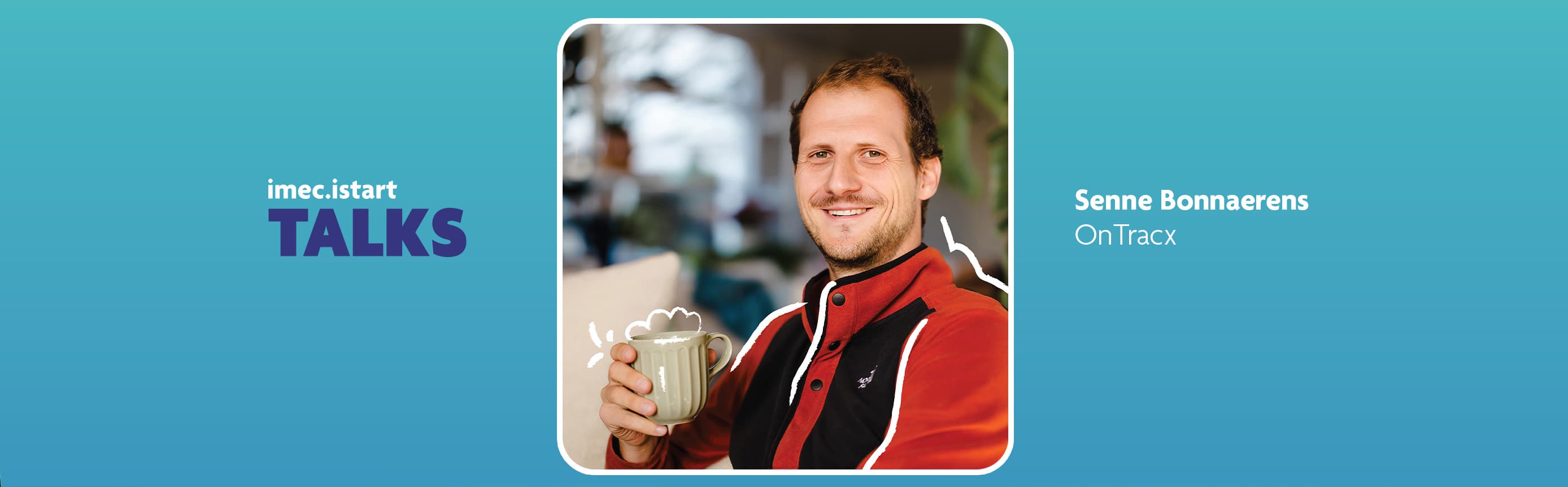
imec.istart TALKS | On choosing courage over comfort, finding the right co-founder, and knowing when it’s time to leave the lab
In the imec.istart TALKS podcast, venture coach James Pearson brings together founders from the imec.istart community for short, caffeine-fueled conversations about building tech that matters — impact talks, served hot.
For many academic founders, the hardest step isn’t building the technology, it’s deciding when to leave the lab. In this imec.istart podcast episode, Senne Bonnaerens, co-founder of OnTracx, reflects on that moment and what it takes to turn solid research into tangible results.
From biomechanics research to real-world change
OnTracx originated as a spin-off from Ghent University, rooted in biomechanics research on running injuries. Many of these injuries are caused by overuse, a gradual build-up of biomechanical load that the body can’t handle over time.
In lab settings, that load can be measured precisely. The real challenge, Senne explains, was getting those insights out of the lab and into the hands of runners, physiotherapists, and sports doctors in a way that fits everyday practice.
Choosing courage over comfort
Like many researchers, Senne faced a familiar crossroads: stay in academia or take the leap into entrepreneurship.
“The skills you learn during a startup, and the impact you can have, are so much bigger than staying in a safe job.”
Academia, he explains, can become a kind of golden cage: intellectually stimulating, well-structured, and secure, but also slow to change and limited in reach. Leaving wasn’t about rejecting science. OnTracx remains deeply science based. What changed was the ambition: from publishing results to putting knowledge to work.
When rigor becomes friction
Leaving academia doesn’t automatically change how you build.
Many founders carry their academic reflexes straight into startup life: the instinct to analyse longer, refine further, and wait until the solution feels complete.
“Don’t be afraid to put a beta version online. You’ll learn more from real users than from perfecting your solution in the lab.”
Senne highlights how academic founders often over-develop their solutions, refining long past the point where users are already satisfied. Real progress starts when feedback enters the loop.
“Research is great, but at some point you need to step out of the lab and into the real world.”
Finding the right co-founder
Beyond technology, Senne stresses the importance of building the right founding team, not just in terms of skills, but personal alignment.
“You’re basically getting married. If there’s no personal click, don’t do it.”
Trust, communication, and shared values matter just as much as expertise when building under pressure.
When research meets reality
Today, OnTracx helps professionals monitor biomechanical load and prevent injuries both inside and outside the clinic. For Senne, the real lesson is this: learning only starts once you stop refining in isolation and let real users in.
☕ Founder fuel
Senne keeps caffeine in check. A few cappuccinos before noon do the job. Anything later and sleep takes the hit.
Listen to the episode