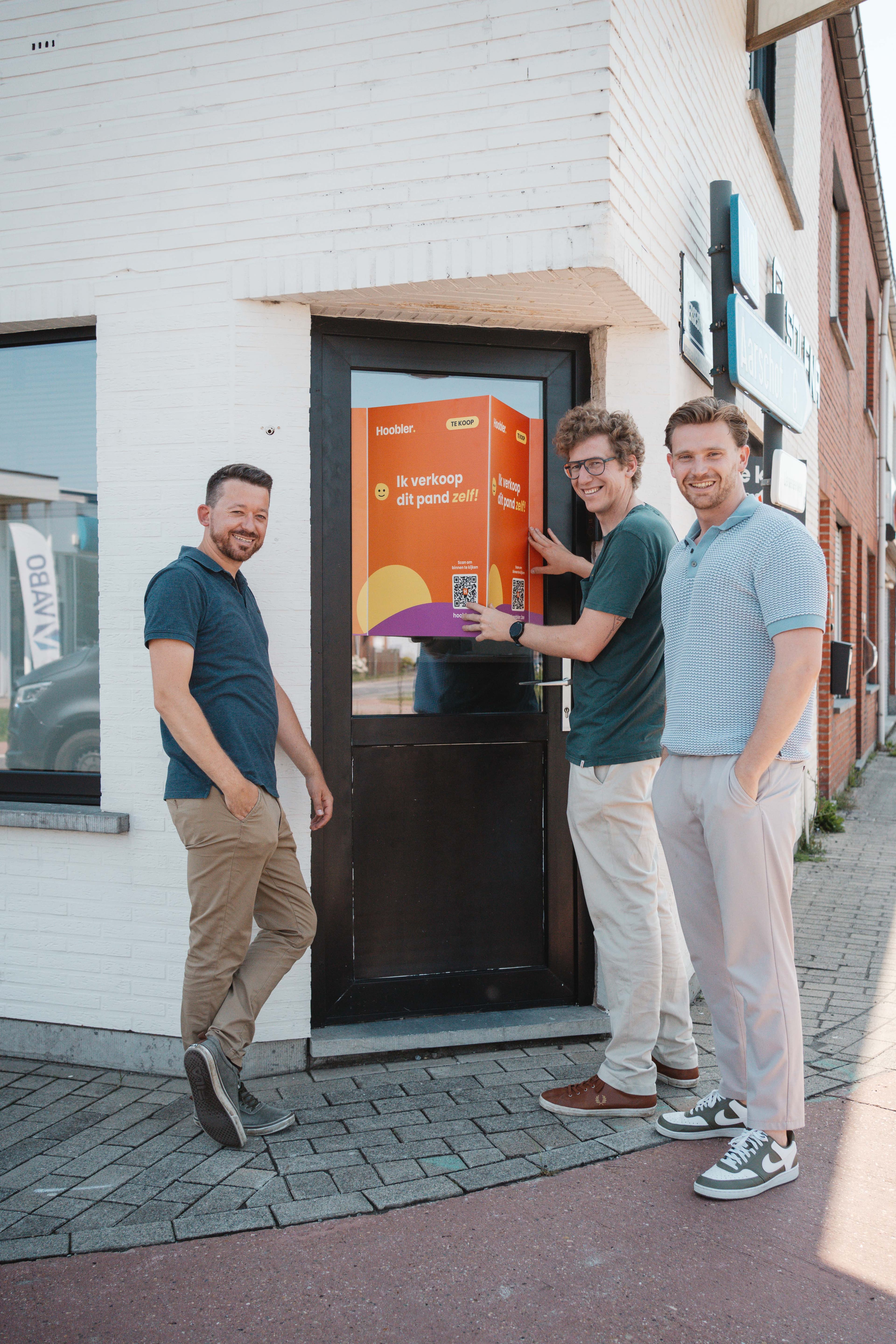
Real estate agents automated the work, but somehow the fee stayed the same.
Hoobler lets Belgian homeowners sell their property independently, with digital tools, automation and structure supporting them throughout the process. The goal is to make selling a home simpler and more accessible without the traditional real estate agent commission.
The idea for Hoobler came together around the same time from different angles. Through Jasper’s previous company, Viva – Visuals in Vastgoed, the team had already heard plenty of stories from homeowners who wanted to sell their property themselves but didn’t know where to start. Around the same time, Thomas was trying to sell his own home and ran into the same problems. The two started talking about it, and soon realised they were looking at the same gap from different sides.
Sander knew the real estate market inside out and recognised the same frustrations. He eventually sold Thomas’s home himself, and quickly saw the potential in what Jasper and Thomas were working on. The three of them decided to build Hoobler together.
So they built the tool instead
In May 2025, Jasper, Thomas and Sander started Hoobler, giving homeowners access to the kind of tools and automation that have traditionally been available to real estate agents. The goal? To help people sell their own property, stay in control of the process, and save the commission they would otherwise pay an agent.
Before building anything, they spent time talking to people: homeowners who had sold their property privately, as well as many others about their frustrations, needs and expectations. Those conversations helped shape their business and financial plans. They then looked for the right investors and secured the funding to start building the product. The first version came together around two months ago and is now being tested extensively with potential users, ahead of the public launch.
The real challenge is getting people to trust it
Building trust is Hoobler’s biggest focus right now. People have relied on real estate agents for decades, and selling a home is a major financial decision that comes with plenty of emotion too. Asking homeowners to handle that process through a digital platform instead of with a person is a big shift.
That’s why the team is paying close attention to both the product and the way they communicate. The platform needs to feel clear, intuitive and reliable throughout the process, while the communication around it should stay human and transparent. They want homeowners to feel supported and in control as they work their way through the sale, even if there’s no traditional agent sitting across the table from them.
Why they joined imec.istart
The core platform is already in place, and the team is now preparing for launch. That’s where imec.istart can help them sharpen their positioning, validate their growth choices and avoid some of the common mistakes that come with this stage of building a company.
Trust is another big part of it. Hoobler wants homeowners, partners and investors to feel confident in a new way of selling property, and being backed by a respected programme can help build that confidence. The imec.istart network also gives the team access to experienced founders, people with expertise in product development and scaling, as well as potential partners and future investors.
What's next
Hoobler plans to launch publicly in September 2026, starting in Leuven and Aarschot. The team wants to stay close to its first users, learn from their experience and improve the platform before expanding across Flanders, followed by Wallonia and the rest of Belgium.
Longer term, the ambition goes beyond private sellers. Hoobler wants to develop solutions for professional sellers and property developers, and eventually move into rentals and renovation too. International expansion is also part of the plan, with the Netherlands, France and Germany among the potential first markets beyond Belgium.
Hoobler is part of imec.istart's Summer 2026 cohort, and over the coming months we'll be working alongside the team as they sharpen the product and get ready for launch.
.jpg&w=3840&q=75 "Matteo and Arnaud (founders Alia)")